



Living near the ocean comes with sunset views and salty breezes, but that same air may be gradually damaging your home’s plumbing system. If you’ve never thought much about this, it might be because the problem often stays out of sight until a leak forces the issue. Early awareness gives homeowners more time to address vulnerable components.
Local plumbing contractors in Santa Cruz see this pattern often, and for unsuspecting homeowners, the resulting damage can be an expensive surprise. In this guide, Expert Plumbing & Water Heaters, Inc., explains how coastal air damages plumbing pipes and how a plumber can help protect your property.
Why Salt Air Can Be Hard on Metal Pipes
Salt particles carried in from the ocean are minuscule, but they travel much farther inland than homeowners might expect. Once they settle on a metal surface, these particles can trigger salt-related corrosion.
Dissolved salt is highly conductive, so when it mixes with moisture in the air, it forms a solution that speeds up oxidation on exposed metal. Because of these properties, metal pipes corrode much faster near the coast than they would in a drier, inland location. Copper, galvanized steel, and even some grades of stainless steel may all be vulnerable once salt and moisture team up against them.
How Coastal Humidity Adds to the Problem
Humidity also plays a central role in coastal pipe damage. Constant moisture in the air can condense on cold pipes, especially in crawl spaces or garages without much airflow. That condensation does more than create dampness; it keeps metal surfaces wet for longer, allowing salt to accumulate on fittings and joints.
Certain components may wear out faster in consistently damp conditions. This can lead to small leaks that go unnoticed until they damage the plumbing system.
Signs That Something Is Affecting Your Plumbing
Blue-green residue around copper fittings is a classic sign of water chemistry issues. Salt-laden sea spray can also gradually corrode exposed metal, which is often bad news for any exposed fittings and connections around your property.
Corrosion may announce itself with a single dramatic failure, but more often, it shows up through a handful of smaller warning signs that become more noticeable over time. With pipes exposed to sea spray or salt-laden air, you may find:
- Flaking or bubbling surfaces: Paint or protective coatings may begin to blister, peel, or flake.
- Pitting: Small, localized holes can form on exposed pipe surfaces, gradually reducing the metal’s strength.
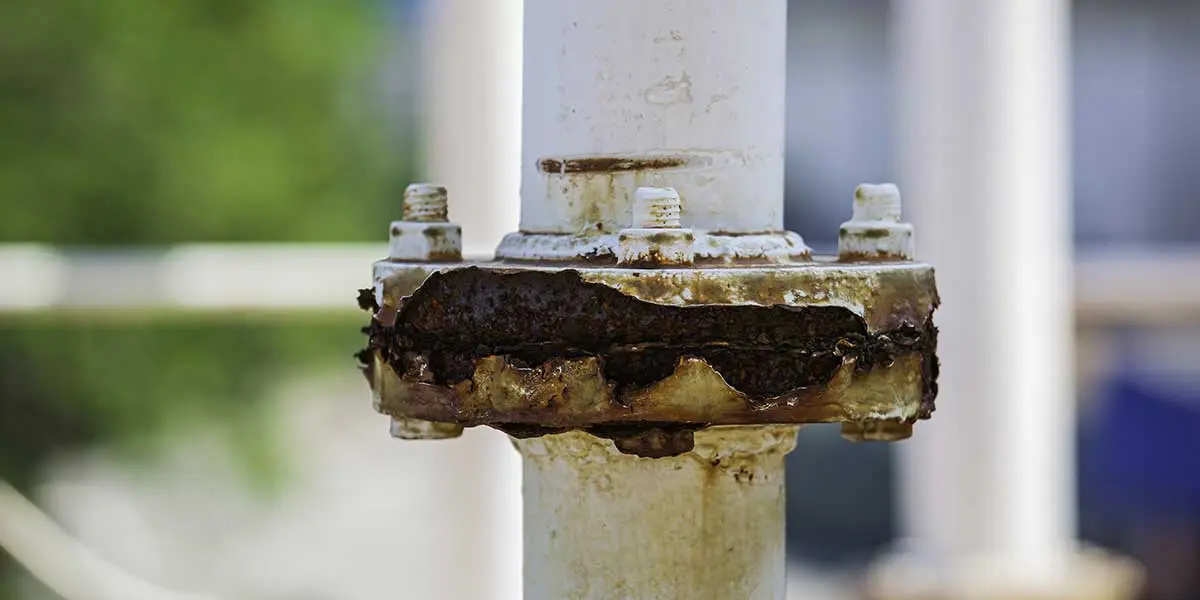
- Corroded joints and fittings: Connections, fasteners, brackets, and other exposed components can show reddish-brown rust and white salt deposits.
- Visible metal deterioration: Severe external corrosion can perforate sections of pipe or compromise their structure.
Not every material reacts to salt the same way, so it helps to understand the various types of plumbing pipes and fittings before deciding how to respond to concerning symptoms. Once you understand how coastal air damages plumbing pipes, recognizing issues early can be a big part of preventing major repairs.
What Pipe Deterioration Looks Like
Pipe deterioration from coastal exposure doesn’t happen overnight, but it does follow a fairly predictable pattern. Zinc coatings on galvanized steel tend to wear away first, exposing the steel underneath to direct corrosion. Copper may hold up better initially, but prolonged exposure can still cause pinhole leaks that let water escape gradually.
Outdoor fixtures tend to show damage the fastest, since spigots, hose bibbs, and exposed fittings take the brunt of the salty air year-round. Visible rust or pitting on these outdoor fixtures is often a big clue that deterioration might already be underway elsewhere in the system. Leaks are especially frustrating because they can go undetected inside walls for months.
Protect Your Pipes With Expert Plumbing & Water Heaters, Inc.
Salt and humidity work together to speed up corrosion in almost any metal component they touch, but catching the early signs can make the difference between a simple fix and a major repair. Our guide to common plumbing repairs covers many repairs often needed when coastal corrosion causes damage, and our technicians are also happy to answer questions specific to your home.
As a family-owned company with nearly 15 years of experience serving the area, we back every inspection with free, accurate estimates and same-day service whenever possible. Call Expert Plumbing & Water Heaters, Inc., today at (831) 316-7338 to learn more. We know how coastal air damages plumbing pipes in Santa Cruz and how we can protect yours.